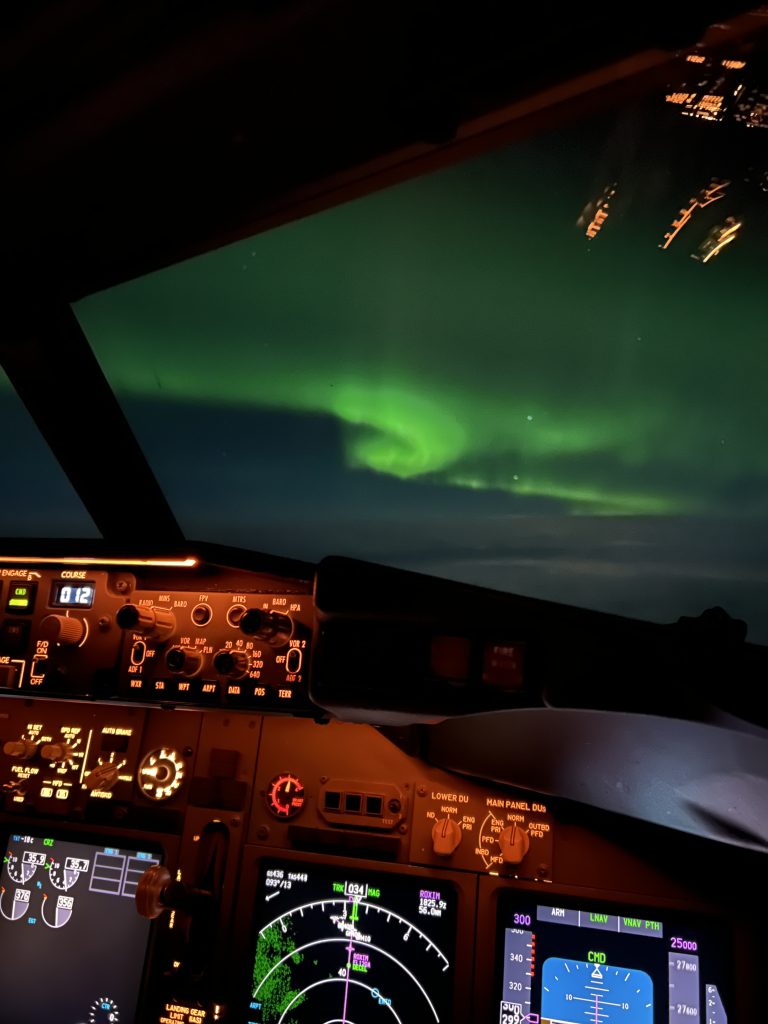
Aircraft General Knowledge (AGK) is split into 3 different subjects, Electrics, Powerplants (I may refer to it as Engines from time to time), and Systems. Each of which has its own book and various number of questions in the two hour exam. Approximately, there are 39 systems questions, 12 electrics questions, 26 engines questions and then 3 systems ones again, often along the lines of pressurisation and oxygen.
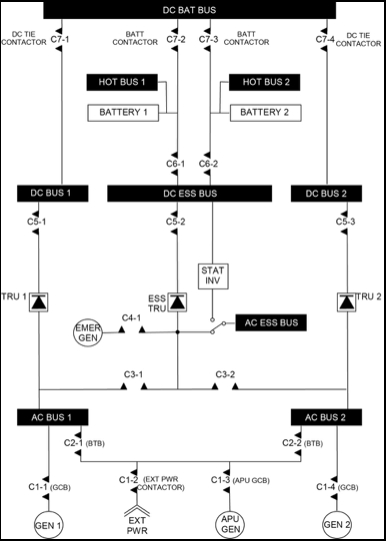
Here I aim to outline the best I can what happens in each chapter that we’ve learnt to give you some kind of idea the shear volume we have to learn in such a short period of time and then commit to memory ready for exams along with the other subjects that we are also learning at the same time. Firstly, Electrics, where we look at the 2 different types of electricity on board, AC and DC, how they’re both generated, stored and then distributed round the aircraft to be used at different places in the aircraft. surprisingly, the answer is not magic and flicking a switch and it works is also not the answer, as we were told in our first lesson! The breakdown of chapters is as follows:
- Chapter 1: Introduction and basic principles,
- Chapter 2: Further electrical concepts,
- Chapter 3: Switches,
- Chapter 4: Batteries,
- Chapter 5: Magnetism,
- Chapter 6: Circuit Protection,
- Chapter 7: Generation,
- Chapter 8: Aircraft Distribution Systems,
- Chapter 9: AC Principles,
- Chapter 10: Three phase AC generator,
- Chapter 11: Static electricity,
- Chapter 12: AC Components,
- Chapter 13: AC Distribution,
- Chapter 14: DC Distribution,
- Chapter 15: Electric motors,
- Chapter 16: Semiconductors and logic.
A total of 21 hours to learn all of these 147 pages. A relatively small few chapters in the grand scheme of things as you’ll shortly see! We have one lad in our CP who did electronics at A-Level and he’s helped us a lot through this topic, explaining different elements with the teachers t try and simplify it down so its easier for us to understand, which has really helped, so a massive thank you to him.
Next, systems. Systems looks at how the aircraft is built, the different components on the aircraft (not looking at the instruments on board, there’s a whole topic on them in module 2) and how they’re important in their own ways to either keeping the aircraft in the air or keeping it on the floor, which may sound odd at first, but you don’t want the plane to try and take off again when coming into land or taxiing round the airport! The breakdown of chapters for systems is as follows:
- Chapter 1: Airframe designs and materials,
- Chapter 2: Aircraft construction,
- Chapter 3: Subsidiary airframe structures,
- Chapter 4: Hydraulic system principles,
- Chapter 5: Hydraulic systems,
- Chapter 6: The landing gear,
- Chapter 7: Wheels, tyres and brakes,
- Chapter 8: Primary flight controls,
- Chapter 9: Secondary flight controls,
- Chapter 10: Pneumatic systems,
- Chapter 11: Cabin conditioning and pressurisation,
- Chapter 12: Anti-icing, de-icing and rain protection,
- Chapter 13: Fuel systems,
- Chapter 14: Fire and smoke protection and detection,
- Chapter 15: Oxygen systems.

A total of 36 hours to learn the 453 pages. A lot more information to try and retain in still a short period of time, especially considering all the different parts on an aircraft that we need to consider and all the different components that work together to build up one small part. Systems was probably my favourite of the 3 in AGK, learning, as previously mentioned, about all of the different parts of the aircraft.
Finally, power plants or engines. These generate the thrust required to move the aircraft forward, whether by a piston engine and propeller, seen my typically on your light aircraft such as Cessna 152’s, the plane I flown in my first flight or on larger aircraft such as Dash 8 q400, the type the late FlyBe used to fly.

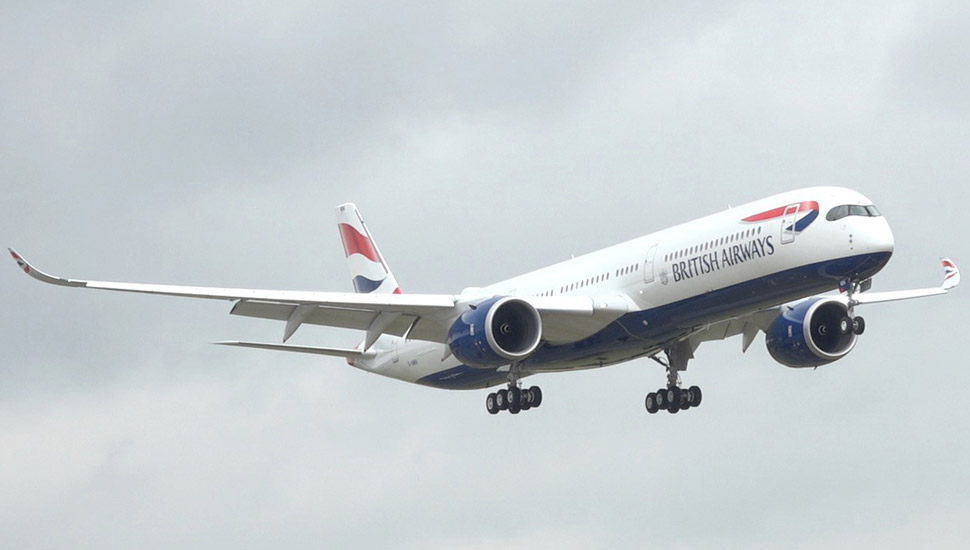
Or they generate thrust by a gas turbine engine with a fan, compressors and turbines, seen on your large transport aircraft that is more commonly associated with air travel, such as your Airbus A-350 or Boeing 787.
The breakdown of the power plants book is as follows:
- Chapter 1: Essential physics revision,
- Chapter 2: Piston engine principle of operation,
- Chapter 3: Piston engine designs and components,
- Chapter 4: Piston engine lubrication and cooling,
- Chapter 5: Piston engine starting and ignition,
- Chapter 6: Piston engine fuel systems,
- Chapter 7: Piston engine supercharging,
- Chapter 8: The diesel engine,
- Chapter 9: Piston engine power, efficiency and control,
- Chapter 10: Propeller aerodynamics,
- Chapter 11: Propeller systems,
- Chapter 12: Gas turbine principles,
- Chapter 13: Gas turbine designs,
- Chapter 14: The gas turbine air inlet,
- Chapter 15: The gas turbine compressor,
- Chapter 16: The gas turbine combustion systems,
- Chapter 17: The turbine system,
- Chapter 18: The gas turbine exhaust system,
- Chapter 19: Gas turbine lubrication,
- Chapter 20: The gas turbine fuel system,
- Chapter 21: Gas turbine control and operation,
- Chapter 22: The Auxiliary power unit.
This time we had a total of 31 hours to learn the 486 pages in the book. That is correct, less time to learn more pages. Again, this just demonstrates the shear amount we have to learn in such a short period of time. This topic was really interesting and when I washed my car, couldn’t resist having a proper look under the bonnet and identifying different parts, now knowing what they look like and their function within the engine. However, this was only possible with the piston engine as sadly I don’t have a spare turbine engine to look in!
So, within AGK, a total of 88 hours to learn 1,086 pages all to be tested on. My final EASA grade comes down to 2 hours and 80 questions, where anything from all those pages can be tested and most likely will be tested. And I am delighted to announce that after taking my Aircraft General Knowledge EASA exam, I achieved a grade of 88% due to all my hardworking and effort, and I could not be happier with my result.