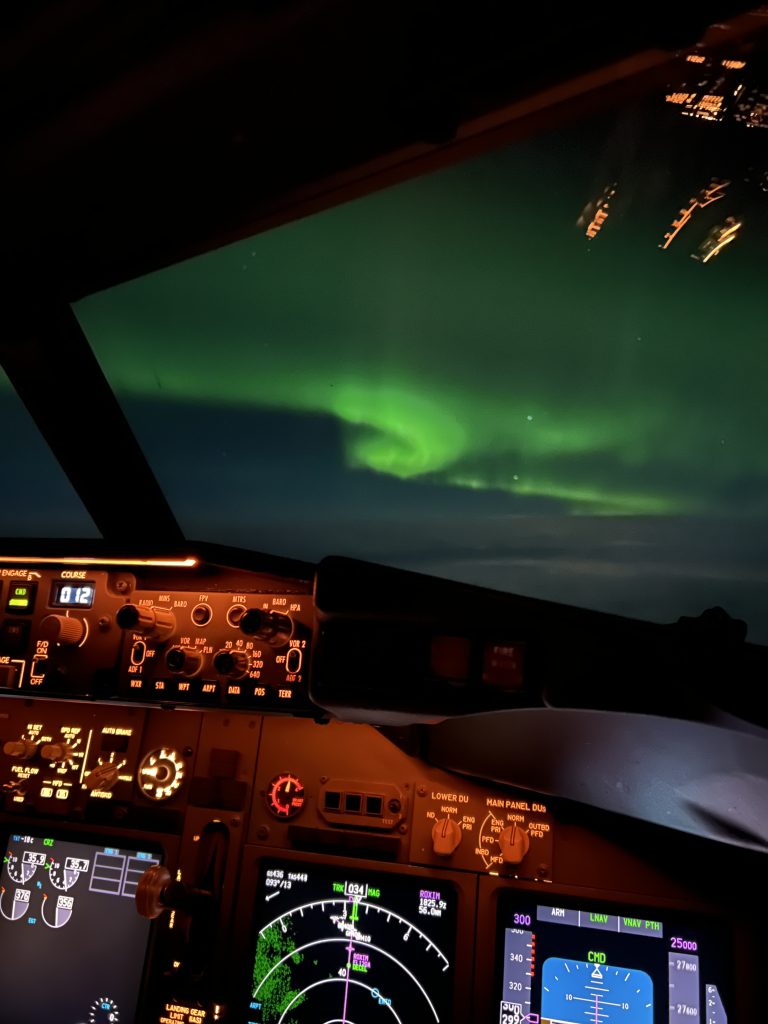
Monday 1st January 2024 to Sunday 31st March 2024. Total sectors flown for Ryanair 114 totalling 258 hours and 39 minutes, equating to a total distance of 93,063nm which is the equivalent to 54 times across the Sahara Desert, 4.3 times around the Earth and in my quest on flying the same distance to the moon, I’m 44.8% of the way there! What a brilliant few months it’s been! The month started being signed off from line training in Alicante, I was then back to Leeds Bradford for a couple of months flying the line with a few interesting flights to say the least! I was then moved to London Stansted on the 1st March 2024 where I joined Ryanair U.K. and continued flying the line. It’s been a brilliant few months with some incredible experiences and I absolutely love what I do!
Completion of Line Training
I know I mentioned this at the end of my previous blog with an edit, however, it’s such a large achievement I thought I’d quickly recap on what happened. I was placed on an out of base placement from Leeds Bradford to Alicante again flying on Tuesday 2nd, Wednesday 3rd and Thursday 4th January 2024. The first day I flew to Torp in Norway where on the way home, the block time, (starting pushing back to shutting down the engines) was 4 hours and 3 minutes long – my longest flight to date! This was partly due to some stronger headwinds slowing us down on the way back and also because we had to de-ice the aircraft. It’s also by far the coldest walk-around I’ve done where the outside air temperature was in the minus, and just being in trousers and a shirt with a coat on top definitely was not enough layers! The second day I flew to Eindhoven and back, and after a good flight, I was recommended for my initial line check.
The next day on Thursday 4th January 2024 I arrived nice and early for my initial line check for Ryanair, all things being well this would sign me off from line training which means I would be able to fly with ‘regular’ Captains and would move onto the 5 on/4 off roster. This would then also progress me onto the Ryanair contract as opposed to remaining on the Airline Flight Academy contract. Although I was slightly nervous, I treated it as just another flight and if I did what I had been doing up to this point then I’ll be absolutely fine. A slightly eventful flight while I was pilot flying as on our approach into Poland they were extremely helpful and unhelpful at the same time as they changed the runway and gave us a shortcut too; this amounted to approximately 4 minutes time saving, however this meant we were too high and were using the speedbrake, increasing speed (sounds counterintuitive I know, but by increasing speed, the aircraft pitches the nose down to increase speed and thus increases it’s rate of descent so you descend quicker) and taking flaps early. It was all fine but I could’ve done without that on my initial line check! I passed my initial line check with a ‘strong performance’ and as such marked the end of my line training with Ryanair.
January 2024
Following completion of my line training, this meant I was now to be rostered as a ‘normal’ first officer. I would still be base in Leeds Bradford for time being, however I knew come the 1st March 2024 I would move to my permanent base in London Stansted on the Ryanair UK Junior First Officer Salary too. In the meantime, I would be continuing to fly as I had been previously, except with different captains and to some new destinations too from Leeds Bradford airport. Although the captains I’d be flying with weren’t qualified as line training captains that I’d been previously flying with, I am now getting exposure to other peoples way of doing things and managing the aircraft and the flight. Although the learning curve for the previous three months has been steep, this was only going to continue into the next few months too.
My first flight newly released from line training was my longest one yet, down to Fuerteventura and back so was good experience on longer routes and new airports too. The landing was interesting in Fuerteventura as the runway has what’s called a ‘displaced threshold’ this means a “runway threshold (the part that looks like piano keys), located at a point other than the physical beginning or end of the runway. The portion of the runway behind a displaced threshold may be used for takeoff in either direction and landings from the opposite direction.” This means we can’t land on it. At Fuerteventura, the threshold is displaced by 1,000m or 1km long, as a result this gives the illusion to us pilots that we’re high on the approach when in fact we’re not. As a result, when landing, you’re constantly fighting your urges to pitch down and land the aircraft thinking you’re high on approach when you’re not!
Being newly released from line training, it means the roster has mainly been published so trying to fit me in to fly is more difficult. This means rather than being sat at home on an ‘off’ day I have a lot of standby on my roster. This means, if a pilot phones sick or can’t work, I’ll receive a call and operate the flight as the first officer instead. We still get these when rostered normally from time to time, however, I’m having a lot more at the moment.
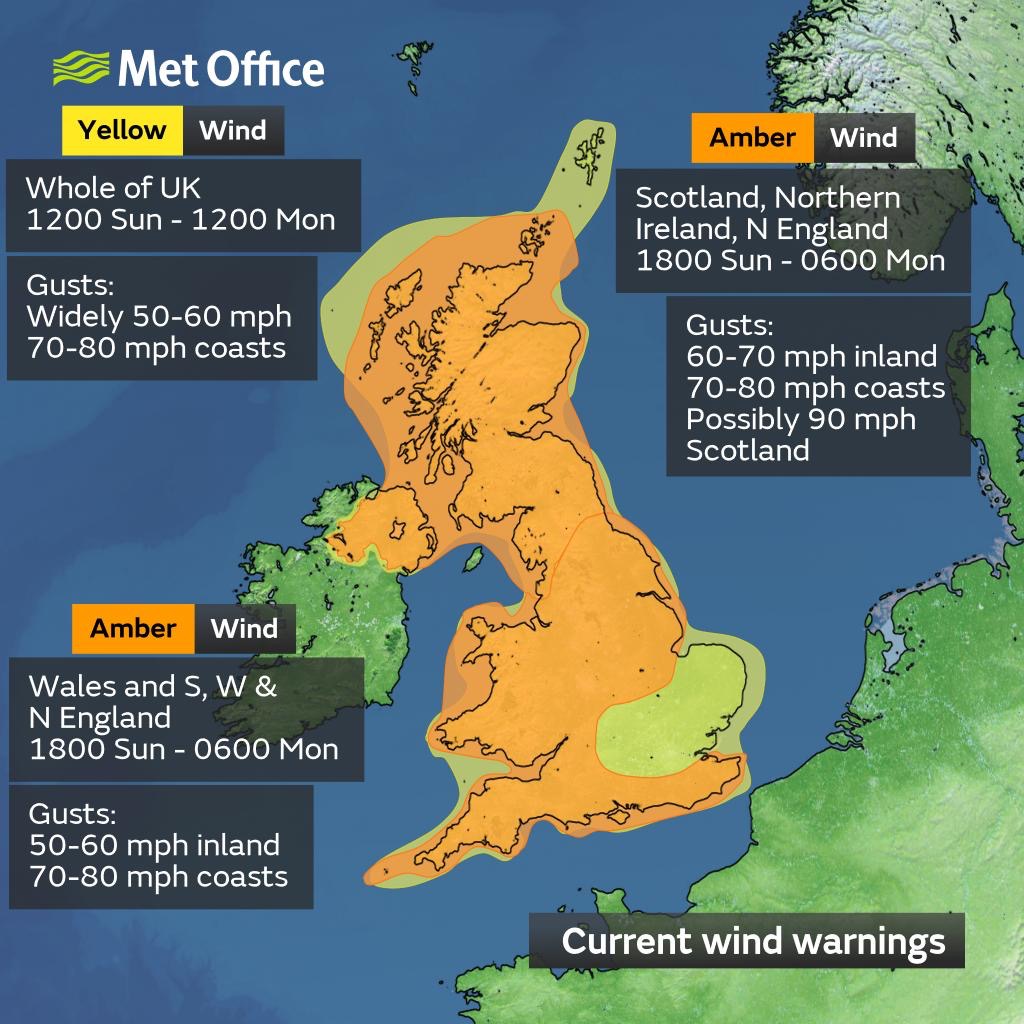
My final flight of the month of January was probably my most interesting of my career so far! I was due to operate Leeds Bradford to Arrecife Lanzarote airport – I’d only been in here as a passenger so was excited to fly it myself! However that’s about where the excitement’s ends. The U.K. was about to experience Storm Isha where the Met Office reported “Amber and yellow severe weather warnings have been issued as Storm Isha approaches the UK on Sunday, in what will be a widely windy day for the UK. Many places are likely to see gusts of 50-60mph, even inland. Near coasts there will be widespread gusts of 60-70mph, possibly reaching 80 mph in a few places.” Because of this, it made it nearly impossible for planes to land, more so at Leeds Bradford where the winds were coming from the side, meaning the crosswind was too great and planes were diverting to Manchester to land nearby.
We were asked to report at 12:10 in the afternoon for our flight, scheduled to depart at 12:55, at the time there were no Ryanair aircraft on the ground in Leeds. The flight kept on being pushed back, until finally and empty aircraft took off from Porto. The plan was for this aircraft to land, then we’d take the plane down to Lanzarote and back. How this aircraft landed in Leeds, we really have no idea but it did! We then loaded up with fuel, bags and our passengers and took them down to Lanzarote, departing a lot later than scheduled at about 16:45. On the way down myself and the captain were discussing what the plan would be. Leeds Bradford had a strict curfew of 23:00, we’d land in Lanzarote at approximately 20:30, assuming a 30 minute turnaround we’d depart at 21:00 so landing in Leeds at 01:00 the following morning, 2 hours after the curfew. We were looking at our options and if we could make it back to Manchester, Liverpool or East Midlands so at least we’d be in the right country, and passengers would be bussed back to Leeds Bradford airport.
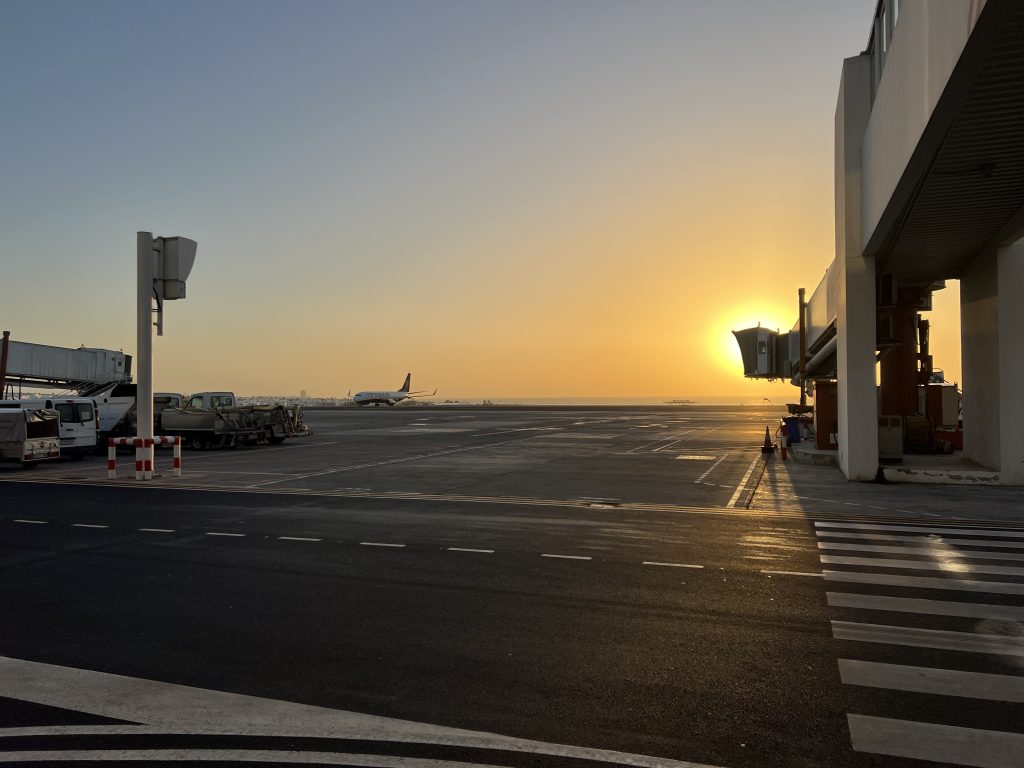
We landed in Lanzarote at 20:30 and our decision making went to waste. Ryanair had decided for us that we’d overnight in Lanzarote, have our rest then bring the plane back to Leeds Bradford as an operating crew the following morning. I know at times Ryanair gets a bad name, however the way this was organised for both the passengers and ourselves was incredible. The passengers that landed went on with their holiday as normal, just landed slightly late. Those who were meant to be flying back to Leeds in the evening were bussed to hotels where they had an extra night which Ryanair paid for then bussed back to the airport the following morning to get home on our flight. We were put into a taxi and sent to a hotel where 6 rooms for 6 members of crew were all waiting for us on arrival and the hotel and rooms were stunning. Out of the kindness of the hotel, they even put on an early breakfast for us.
The next morning, the passengers were all lovely, we were expecting some of them to be annoyed with us, quite rightly angry with the situation, but they were all brilliant and understanding of the situation so made the whole circumstance a lot easier to deal with. We landed back in Leeds the following day with some really strong winds and managed to get the aircraft onto the ground. My first overnight experience, and although I wouldn’t want to repeat it often, it wasn’t as bad as some made it out to be!
February 2024
February began in the simulator in East Midlands for my annual simulator for my licence proficiency check (LPC) and operator proficiency check (OPC). Because I was going to be joining Ryanair UK whom operate under the U.K. CAA, this also meant I had to complete my initial check for the U.K. CAA so I could have my Boeing 737 rating on my U.K. CAA licence. I was meant to have two days in the simulator over winter, day 1 being a training day and day 2 being the LPC/OPC; however due to the simulator going tech the day before, the training day will be rescheduled for another time. I’m pleased to say that I passed this simulator assessment with “a good to very good standard for Harry’s first recurrent check. Carried out procedures in a conscientious, methodical and diligent manner.” Being my first time in the simulator since passing my line training and since I passed my initial assessment back in July, I was nervous going into it – I think it would be more abnormal if I wasn’t! As such, there were a few things to work on that I hope to improve on before I go into the simulator again in the summer.
My next block of flights had a bit of a result, I was called off standby on 3 occasions meaning I got to fly rather than sat waiting for a call to not come in. I will always pick flying over not flying every single day of the week! While in this block, I also had another interesting train of events, where truly one small impact can lead onto something bigger.
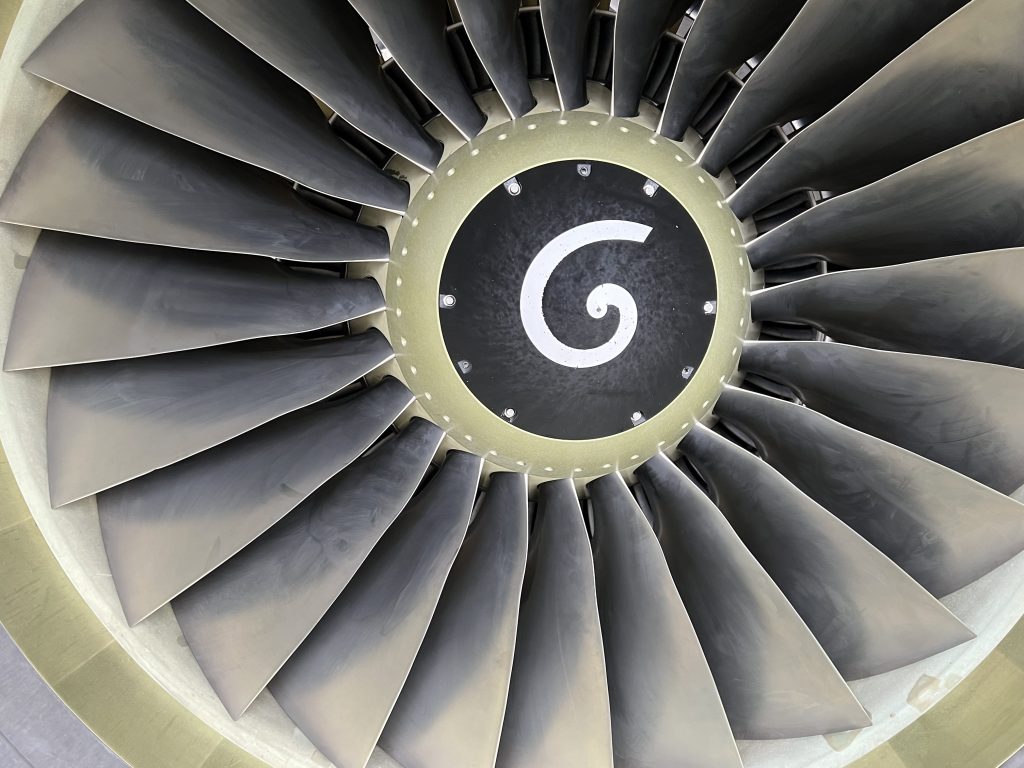
The problem began on day 1 where we were due to fly EI-EKG from Leeds Bradford to Porto. We were about to ask for our pushback and we were all ready to go when we received a Master Caution warning for the Captain’s side from window (L1) overheating. We ran the checks in the QHR which essentially said turn it off, wait, and turn it back on again to which the fault reappeared. We called out the engineer to have a look who said it could be one of a few problems; first the window is overheating, second there’s a fault in the panel, third there’s a fault in the wiring, or finally needs resetting in the E&E bay. The engineer began with the easiest and went down to the E&E bay to reset the panel. When they came back upstairs and turned the window heat on again, the fault light disappeared – success! Although not quite. The element began to glow in the window, and where I was sat lower than the engineer stood up, I pointed out if this was normal. With some profanities he quickly turned the window heat off again, by which point the element had started smoking, cabin crew were poking their head round the door if they needed to evacuate – we most certainly did not! Where it was raining outside, the cold water on the hot window caused it to crack and that aircraft was definitely staying on the ground.
Another aircraft had just landed from Dublin, so simply we took the aircraft off them and flew down to Porto and back. However, we were tight. The same curfew of 23:00 I mentioned earlier still applied. We landed back from Porto at 22:55 and were on blocks at exactly 23:00 – to say this was pushing it close is not an understatement – we were very close to either having to overnight in Porto or divert to Manchester. If this doesn’t show how big an effect such a small problem can have, then I don’t know what can! However, this small problem didn’t end there…
The next day I was due to fly to Krakow in Poland, again on EI-EKG. The aircraft had to have the whole front window replaced which involves taking out the mode control panel (MCP) for the autopilot and parts of the overhead panel too. As such, the aircraft was previously qualified to fly CAT III landings (50ft decision height), however, by removing the MCP and parts of the overhead panel, the aircraft was now degraded to landings in CAT I conditions (200ft decision height). The crew flying the aircraft in the morning completed a practice CAT III to sign it off to be CAT II compliant again which required an engineer; however there weren’t any in Leeds to do this. We phoned Ryanair Maintenance to ask for an engineer in Krakow which they said they’d try and get one there. On our way into Krakow, we said we’d complete another practice CAT III approach so we can say we’ve seen it and sign it off, but when we arrived in Krakow, there were no engineers – they weren’t able to find one. This normally wouldn’t be a problem, however the weather conditions in Leeds Bradford were indicating 100ft cloud base, and it wasn’t budging all day. We took plenty of extra fuel, but we already had an idea of what was going to happen.
We flew back to Leeds Bradford, had an attempt at the ILS and at 200ft, couldn’t see the runway so went around to enter the hold. The captain told me afterwards he could see maybe one or two runway lights only once we were well into the go around so the cloud needed to rise a fair bit before we’d be able to get in. The reason we could see it in the go around is because the aircraft possesses momentum so once we make the call to go-around it takes a few seconds to transition from descending into climbing again. We entered the hold over Leeds Bradford airport and waited until the cloud base was going to hopefully improve. The controller said it had been fairly stable at 100ft for his entire shift, but if it rises he’d let us know. About 15-20 minutes later, we were just about to divert to Manchester, the controller said the it was indicating 200ft cloud base. We thought we’d try and give it a go and if unsuccessful we’d divert to Manchester. Before this approach we were all set up for routing to Manchester to help us later on. We had another attempt, but again at 200ft we couldn’t see the visual cues we needed to and went around; again the captain said maybe one or two lights, but about the same as before. We diverted and landed in Manchester. Again, Ryanair were great when we landed in Manchester and we were in a taxi back to Leeds Bradford airport pretty much as soon as we were on the ground. That evening, we were due to be on the ground at Leeds Bradford airport at 22:00, instead we made it back to Leeds Bradford airport 02:00 the next morning.
My next few flight from Leeds weren’t anywhere near eventful as what I had seen previously and all went well. It was weird saying goodbye to Leeds. Being such a small base meant everyone knew everyone, so was saying goodbye to some people I’d call friends rather than just colleagues. I hope to fly with some of them again if our paths cross in the future, but I had a really good time while I was up there, met some incredible people and began my Ryanair and commercial flying chapter of my life there.
March 2024
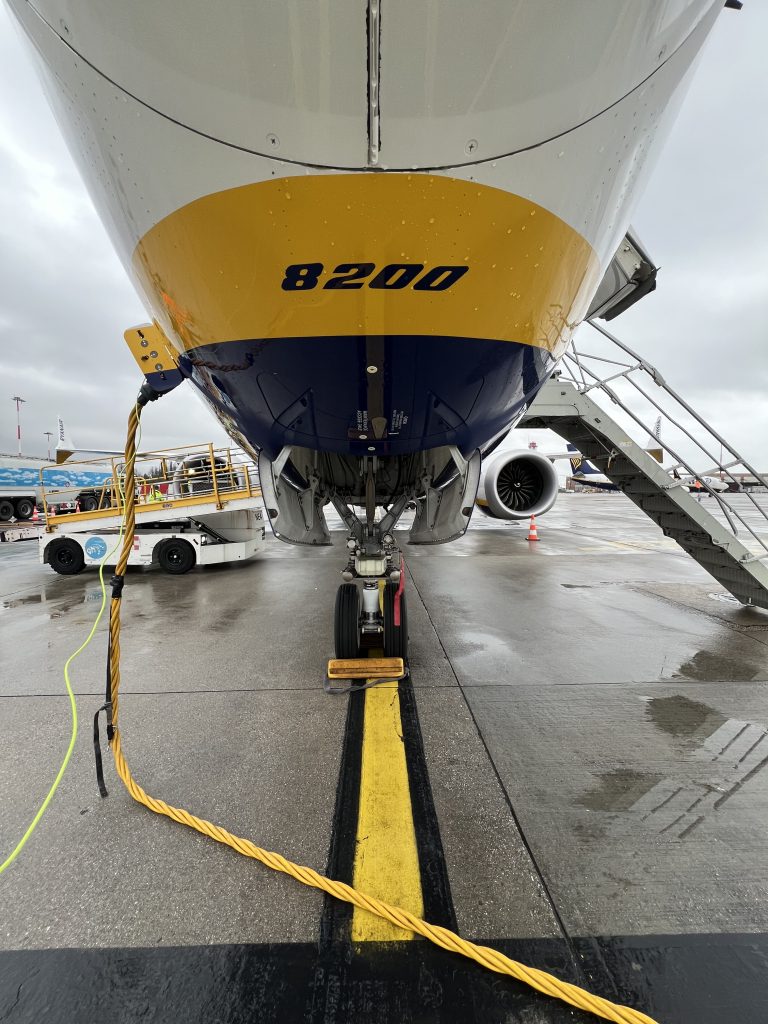
Stansted here I come! My preferred base of choice and it felt right. I completed two days flying for Ryanair DAC to Nantes, France & Palanga, Lithuania on day 1 then Venice on day 2 and it was also flying the Boeing 737-8200 for the last time, or for a while at least. Ryanair UK doesn’t yet have any of the 737-8200 in their fleet, only the 737-800. After these two flights, I was sent up to Manchester for a security training day as part of the Ryanair UK transfer. Come the end of the day there was a test that I passed with 100%. Finally there was an e-learning course to complete in preparation of an upcoming safety day I’ll have to attend.
I’ve now been released onto the line flying for Ryanair UK and for the first time in my career, I’ve flown in two continents! One of my first flights for Ryanair UK took me to Morocco meaning I’ve now flown in Europe and in Africa too! I don’t know why, but I found this to be a real sense of achievement and a huge milestone to tick off.
I’ve also continued to fly around Europe, taking me back to Tenerife South, Torp Olso in Norway and Tangier, Fez and Ouarzazate all in Morocco and that’s me just getting started with Ryanair UK at London Stansted. My roster in the upcoming weeks is taking me to some really interesting places and I can’t wait to tell you all about these next time I post another blog.
Pilots Pay – Airline Flight Academy & Ryanair UK
To clarify, this part of the blog was written for informational purposes only. Given the nature of this blogs target audience – aspiring pilots – this content is designed to provide context to the way in which pilots are paid in the United Kingdom. I accept no responsibility for any changes or inaccuracy in the content after the date in which it was published.
“How much do you guys and girls get paid?” Cheeky of you to ask! I’m not allowed to disclose exactly what I earn, nor state what is written in my contract, however websites such as GlassDoor and Indeed will give you a rough figure thats not too far away. It also needs to be stated that at the moment, I’m employed by Ryanair UK, my previous employer for line training was Airline Flight Academy for the time I was in line training and as such I was not earning what is stated on the websites above.
My previous official employer was Airline Flight Academy, and yes I wore the Ryanair uniform, follow the Ryanair SOP’s, fly Ryanair passengers on Ryanair aircraft, I was not yet employed by them – I am now employed by Ryanair UK following successful completion of my line training however. So the salaries I’m talking about as those as sent to me by BALPA (British Airline Pilots Association).
After a recent negotiation by BALPA with Ryanair there are new salaries that came into force on 01/07/2023 for the 4 flying ranks within Ryanair; Second Officer, Junior First Officer, First Officer and Captain. These pay figures do not include other ranks such as Theoretical Knowledge Instructor, Line Training Captain, Base Captain, Type Rating Examiner for example.
You’ve probably seen us pilots walking through airports together and seen a different number of stripes on our sleeves and/or shoulders. These are our epaulets and equate to what rank we are within the flight deck. The way these work at Ryanair is 2 stripes for First Officers below 1,500 hours flight time, these can be Second Officers according to our pay, or Junior First Officers. The transition is at 500 hours where you change from a Second Officer to a Junior First Officer. We earn our 3rd stripe when we become a First Officer at 1,500 hours which is also the same time we’re able to unfreeze our Air Transport Pilots Licence (ATPL). Above the First Officer is the Captain who occupied the prestigious left hand seat in the flight deck and wears 4 stripes. This is at least 3,000 hours at Ryanair as we have a relatively short time to command unlike other airlines such as British Airways for example, as well as having to pass a command upgrade course. As opposed to all the other progressions, this one requires extra training and passing of skills checks both in the simulator and on the line too.
Now, our pilots pay isn’t the same as someone working in an office job for example. A typical office worker will be told they’re on £24,000 a year and every month will receive £2,000 net salary every month, after paying approximately £191 and £156 a month in tax and national insurance in the U.K. will take home £1,654 providing there’s no student loan or pension. That will remain the same every month until they get a higher pay.
For us pilots though it’s slightly different. We still get a basic salary that’s paid every month no matter if we fly all day every day (not legal to fly all day every day but I’m proving a point), or if we stay on the ground for the entire month. On top of this, we get an allowance. This is for us to help cover the cost of airport car parking, our uniform or any equipment we need. We then get paid for our annual leave that we take for our personal lives outside of flying – yes we’re taking you on holiday or for your business trip, but we want to do the same things too! We then pay into our pension, ready for when we retire – hopefully a long way off for myself but paying in now is only going to reward me later in life! Depending on where we’re based, we may get a London allowance due to the higher cost of living within London. New from the recent negotiations between Ryanair and BALPA we have a dual licence allowance where we’re paid an extra sum of money for holding both U.K. CAA and IAA EASA licences and the extra costs that come with having both licences in the first place and then the costs of maintaining both of them. Finally, we have our sector pay where we’re paid an hourly rate per scheduled block hour. Using hypothetical numbers, it is not this much, if our sector pay is £100 per scheduled block hour and a flight is meant to take two and a half hours, we’d get £250 in sector pay; if it ends up taking only two hours and twenty minutes, us as pilots are quids in, if it takes longer at two hours and forty minutes for example, we don’t get paid any extra.
This means that when I receive my payslip every month I see different figures totalling my gross pay. I have my basic income, pilots allowance, annual leave (if any), dual licence allowance, London allowance now I’m based at London Stansted and my sector pay. I then have my monthly outgoings; tax, national insurance and contributions into my pension. Take the second away from my first and I’m left with my take home net pay each month.
It doesn’t take a lot to be able to imagine that during line training I was at the bottom of this pile, which could be looked at negatively, or the way I see it, is there is only room for me to go up in the world! The pay obviously makes the job a lot better than it already is, but I’ve also found myself wondering when it’s going to feel like I’m actually working! I see my money hit my bank account each month and it’s lovely, but when I’m flying above the clouds I forget that this is what I’m getting paid to do. I’m sure there will eventually become a point when the novelty wears off, but at the moment that doesn’t seem likely in the slightest. I have always been told that providing you do what you enjoy for a living, then you never have to work a day in your life and I can honestly say that is true for me.