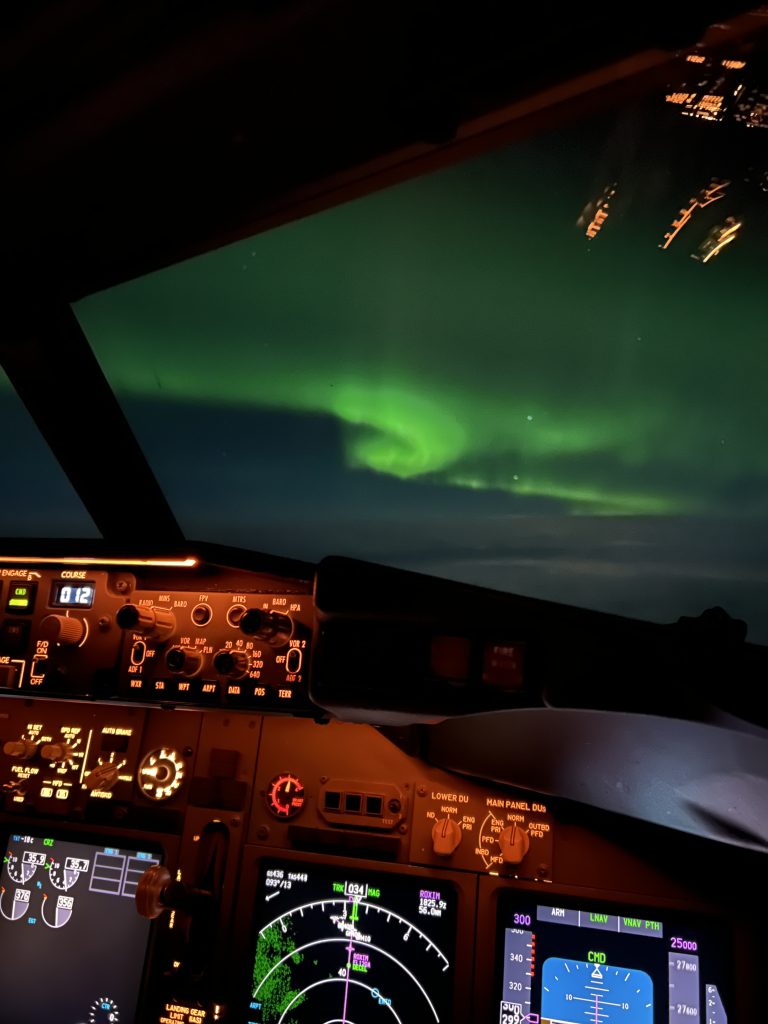
Monday 1st July 2024 to Monday 30th September 2024. A grand total of 268 sectors flown for Ryanair equating to 868 hours and 26 minutes. These flights total a whopping 227,059 nautical miles flown which equates to 1.1 times of the way to the moon – I’ve just got to make it back now from the moon! 10.5 times round the equator of our great green planet, Earth, or while we’re talking about space, 42% of the distance flown by Apollo 13! It’s been another brilliant few months flying to new destinations, albeit this is starting to get smaller as I slowly tick off more destinations and those that I haven’t been to in a while, as well as having some great experiences both in the flight deck and outside too that I can’t wait to share with you all. Of course, there’s been some disruptions this summer with most of it being out of our control, but that’s always leads to good stories to tell you all!
July saw a lot of flying as at the end of June I took some annual leave and therefore had ‘hours to spare’ which meant I got flying – definitely not going to complain about that! The month included the regular destinations in Morocco and Albania as well as some more varied places such as Lanzarote, Oslo, Basel and Bydgoszcz in Poland, where I must say the approach in was stunning looking out of the window. I was also sat on the jumpiest for a flight over to Belfast and back where a Captain had come across from another airline and I was acting as the safety pilot on that flight. This was brilliant sat on the jumpseat again as I hadn’t been there since my own supernumerary days and served as a bit of a reminder just how far I’ve come in such a short space of time. July also saw possibly my most usual flights and sequence of events to date.
I was scheduled to operate STN-PMI-STN reporting approximately 18:00 local time to be finished approximately 00:30 local time. However a few hours before my flight, I received a phone call from crew control explaining how my duty had changed from PMI to now operating the Marrakech flight instead; at a slightly earlier report time. This flight was scheduled to operate at approximately 16:15 local in the afternoon so there was already a big delay. We reported to the airport at the specified time and that’s when things started to turn South. The aircraft we were going to take was operating an Eindhoven flight before us and on their approach hit a bird. This required engineers to fly over from Stansted to Eindhoven, plus another full crew as the previous would now go out of hours, to inspect the damage and then sign it off. This is where you couldn’t make the problem up in a novel if you tried! Ryanair has 4 LearJet’s which are used for transporting crew and some spare parts in extraordinary circumstances such as this. However, on the climb out from Stansted, the LearJet had a pressurisation issue which meant they had to hold above Stansted before returning. They then boarded another LearJet, but then picked up an ATC slot restriction, further delaying getting everyone out to the stranded aircraft in Eindhoven. Thankfully, this one landed fine, the engineers signed off the damage and the new crew brought the aircraft back to Stansted.
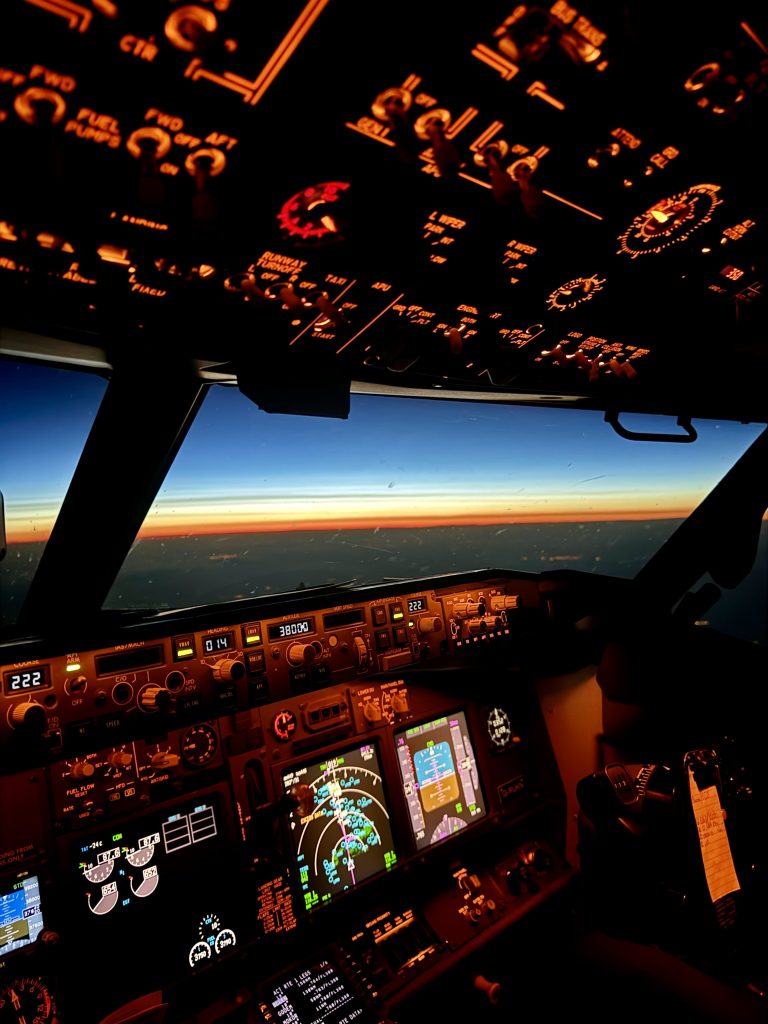
We then boarded the aircraft and took off for Marrakech at a local time of 23:04 – drastically late on the scheduled departure time of 16:15 local. We then ran into our next issue, we’d be running into what’s known as ‘Captain’s Discretion’. The rules simplified on Captains Discretion mean the Captain – and no-one else, not even me as the First Officer or Ryanair as a company, can influence the decision – can increase the maximum duty length by a maximum of 2 hours, it is not allowed to go a minute over this 2 hours. However, we’re only allowed to go into discretion a very maximum of 2 times in a 7 day period and multiple reports have to be filed. Although it is the Captain’s decision, they asked our opinion in Marrakech whether we wanted to fly back to Stansted using discretion or overnight, and we made the decision to return to Stansted. We left Marrakech at 03:03 local time in the morning and got back to Stansted at 06:47 local time. It was a very long night, however, the view of watching the sunrise over the horizon in the morning out of my window was a very special moment and was truly stunning.
August was another good month in terms of experience and exposure; however compared to previous years and my prior expectations of the summer schedule the amount of hours I’ve been racking up isn’t very high at all. This is down to the fact that Boeing haven’t met their delivery targets of aircraft meaning Ryanair crewed for that number and it hasn’t come to fruition. As a result, especially in Ryanair UK, we’re over-crewed and therefore the number of hours is more shared between us and as such we’re all getting less hours as a result. The month began with my sim check. This one in the ‘summer’ months is the usual line proficiency check where we’re tested on certain aspects such as our engines failures and emergency situations as well as looking at our low visibility procedures for the first half, followed by the second half where it’s more focussed on training. This summer the training looked at volcanic ash recovery, Salzberg special training, a raw data ILS with 35kts crosswind and high energy approaches. Overall it was a very good sim and I enjoyed it, with the best part being that I passed again, and signed off for another 6 months. We were told when we first joined Ryanair to put the effort in on the ground, so the sim comes easier and that way you won’t end up dreading going into the sim roughly every 6 months for the rest of our careers. I can honestly say that is true, I don’t dread going in at all and I enjoy being put through my paces and tested and pushed further to improve.
Just when I thought the late finishes were over with the Marrakech incident last month, I had yet another one, this time going to Palma De Mallorca. To make matters slightly more pressing, this was a line check for the captain coming back to the line after having some medical leave and myself too by proxy. While we were sat in the terminal waiting for the aircraft to arrive, a family asked us what was going on, where the aircraft was and other questions like that. They then asked how long it takes to become a pilot and the training involved. They then asked how long we’d been flying. The Captain responded 24 years and the line training captain who’d be on the jump seat responded 26 years (it was about this time length, I can’t remember the exact years!) They then asked me to which I responded “with Ryanair, just over a year” to which they replied, “and where were you before Ryanair?” Granted it probably wasn’t the best response, but it was the most honest response “flight training, and before that… school!” Other passengers in the vicinity smiled with a small laugh, however the gentleman didn’t quite see the humour in my response – lesson noted!
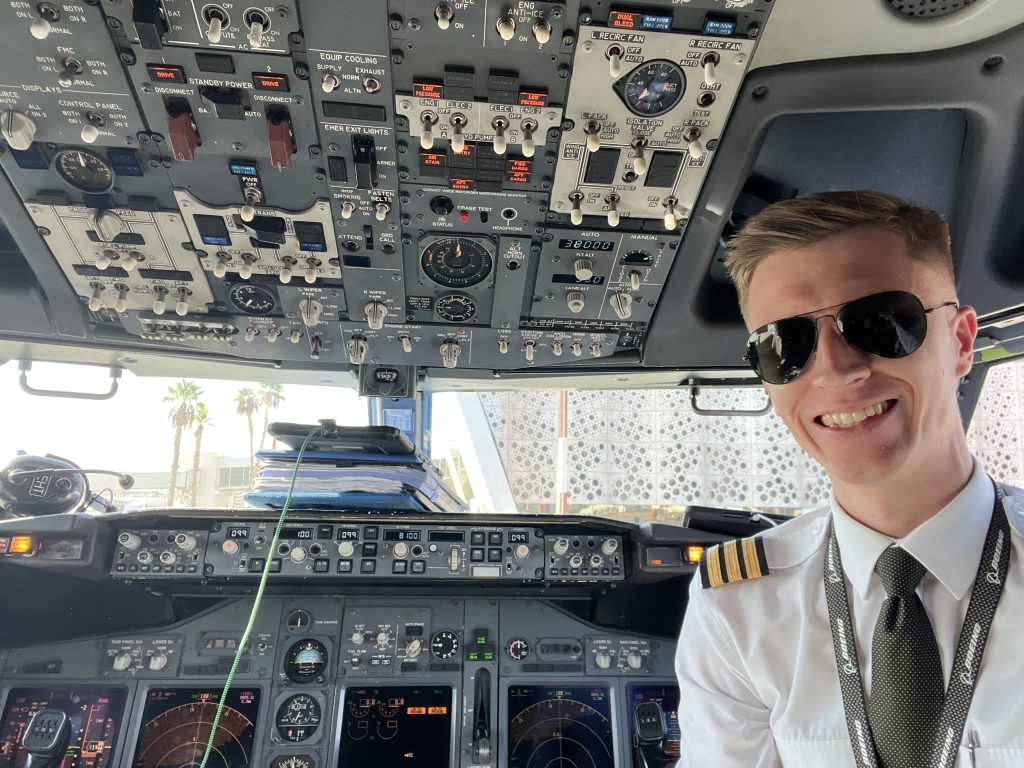
The day started on lates when the aircraft was already running late from previous sectors in the day. We then picked up an ATC slot restriction, and eventually we were on our way. However, over PMI, there was a huge storm brewing and was only going to get worse. We took loads of extra fuel in case of holding, missed approaches and diversions, and on our way in I saw what can only be described as the most brilliant lightning show. We came through a corridor of thunderstorms on both sides and the lightning was impressive. We landed and taxied to stand, unloaded our passengers, re-fuelled and re-boarded and just when we were about to go, we had another ATC slot. The slot was for 01:45 local time with the worst of the storm due to hit between 02:00 and 05:00 local time, so we were in trouble. While we were waiting for our slot, we were refreshing every weather app and weather radar we could find to see if we were going to get out or not. We managed to push back and thankfully get departed; again, running through corridors of thunderstorms and lightning while trying to climb above the storm as quickly as possible. We eventually landed back to Stansted at 03:12 local time, now into my day 6 and what made it all the more depressing was watching the morning crews coming into the car park and walking through security ready to start their day, just as I finished mine!
Finally, in August, I was called into the sim again. However this time it was for something far more important. Myself and a Ryanair UK captain were brought in out of sequence to complete our licence proficiency check and licence skills test – the same one we did back in the winter (for me in February in East Midlands). The reason we were brought in, that we found out on the day, was a Ryanair senior type rating examiner was being assessed by the U.K. CAA who in turn was assessing us! We went through the usual proceedings of a sim by briefing what was likely to happen as well as being tested on our knowledge of the aircraft systems, our memory items and procedures too. We then headed to the sim, myself and the Captain took our our right and left seats respectively. The Ryanair senior type rated examiner in the control seat, then the UK CAA examiner behind him and a further Ryanair type rated examiner sat behind him, monitoring what was going on – to say the sim was crowded was an understatement!
The sim consisted of the same profile that we completed in the winter, and more importantly, I’m pleased to say I passed meaning both my licences were signed off for another year under what was possibly my most viewed simulator session yet! We then had lots of debriefings about what we did well and not so well in the sim – as I’ve always maintained, there is always room for improvement in everything we do. We then had debriefings from the UK CAA examiner on our performance too and finally we had to sign off all of our licences which always takes a lot of time in paperwork!
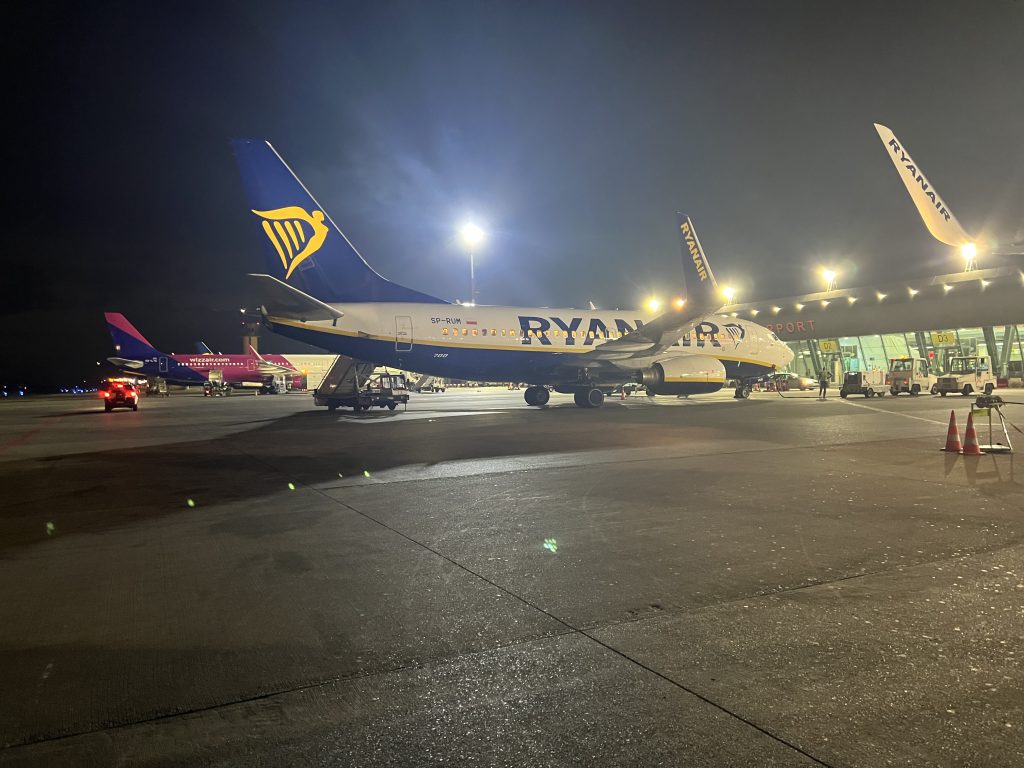
Compared to the previous two months, September has been a lot less exciting! I’ve been back to the usual destinations as previously mentioned, but I’ve also had 4 days of something new to me and rather exciting. I was rostered to fly the maintenance flight for our aircraft which go up to Prestwick in Glasgow. The maintenance staff at Ryanair are recognised as some of, if not the best in the world of aviation and what they do overnight usually at our bases is phenomenal. Only the other week I’ve arrived on the early shift to find out they’ve replaced the flaps overnight and were just finishing their tests before sending us on our way in the morning with no delays at all! However, as Stansted has so many aircraft, sometimes for the bigger checks they need to be sent elsewhere and Prestwick is a heavy maintenance base.
So on Day 1 I flew an aircraft up to Preswick, had a couple of hours sleep in a hotel then flew it back to Stansted the next morning on day 2 and when I got home had some more sleep! This was repeated on days 3 and 4 with a different aircraft. This was truly a great experience to be able to do this, and seeing what it seems like nearly a hundred engineers jump on the aircraft and begin work before we’d even packed up our things and get going again was amazing! On one of the days, they even replaced the first officer seat and to be the first to sit in it while all still new and fluffy and not been sat in a million times and all squashed was definitely something!

Fuel Required Discussion Item
Following on from the previous discussion item trying to put to bed some peoples fears of flying, I was asked the question, “how do you guys know if you have enough fuel? It’s not like a car where you can pull over and refuel, or worst case stop and get out!” Now without sounding completely insufferable, some aircraft can refuel mid air like the F-16; last time I checked though there is not any civilian air-refuelling although if modified some civilian aircraft would be able to. But it’s true, and therefore a lot of I can honestly say, as a passenger I have never once thought about the amount of fuel on board an aircraft; we take for granted that theres enough on board to get us there, plus wait in a hold and divert if we need and maybe that’s if you’re a nervous flyer! But how do us pilots calculate the amount of fuel that we need for a flight?
On our EFB (electronic flight bag) we have an application called EFL (electronic flight log). Within this application it tells us the minimum amount of fuel we need and the breakdown of the amount. This follows the same structure to the amount of fuel that we calculated in flight school using TTCAAFE method – don’t worry I’m going to explain this! I’m going to explain what this stands for first as the way it’s set out on our EFL is slightly different but still covers the same principles.
Using the letters above is the amount of fuel that we need for a flight. The first T is for our taxi fuel and shall not be less than the amount, expected to be used prior to take-off (incl. engine start and taxi). Local conditions at the departure aerodrome and APU consumption shall be taken into account. Many operators use a standard taxi fuel figure for all airports. The next T is for trip fuel and shall include fuel for take-off and climb to initial cruising level/altitude, fuel from TOC to TOD (cruise), fuel from TOD to the point where the approach is initiated, fuel for approach and landing at the destination aerodrome. May also include additional fuel burn due to engine anti-ice and must also account for forecast winds and type of approach. That is the basic minimum fuel we need to operate a flight form A to B.
Now we’re into our reserve fuel and is further broken down. The C stands for contingency fuel and shall be the higher of either: 5% of the planned trip fuel, or; an amount to fly for 5 minutes at holding speed at 1500ft (450m), above the destination aerodrome in standard conditions. The 5% can be reduced to 3% of the planned trip fuel, but only if an en-route alternate is available. The first A is for alternate fuel for getting to our alternate airport which includes: fuel for a missed approach at the destination aerodrome to missed approach altitude, taking into account the complete missed approach procedure, fuel for climb from missed approach altitude to cruising level/altitude, fuel for cruise from TOC to TOD, fuel for descent from TOD to the point where the approach is initiated, fuel for executing an approach & landing at destination alternate aerodrome. The next A is for any additional fuel for any additional reason such as nominating another alternate and the difference in fuel to get there too. The F stands for final reserve and shall be; for aeroplanes with reciprocating engines (prop planes), fuel to fly for 45 minutes; or for aeroplanes with turbine engines (jet engines such as the 737), fuel to fly for 30 minutes at holding speed at 1,500 ft (450 m) above aerodrome elevation in standard ISA conditions, calculated with the estimated mass on arrival at the destination alternate aerodrome or the destination aerodrome, when no destination alternate aerodrome is required. It is the captain’s responsibility never to land with less than final reserve fuel; if we’re going to be landing with less than final reserve fuel, we then have to declare an emergency. Finally, Extra fuel, which shall be at the discretion of the commander allows for contingencies such as: weather avoidance, a lower cruise level or longer departure or arrival procedure is expected, expected ATC delays, use of anti/de-icing systems. The commander may also choose to increase the trip fuel, sometimes simply to increase the block fuel to a round number on the fuel plan.
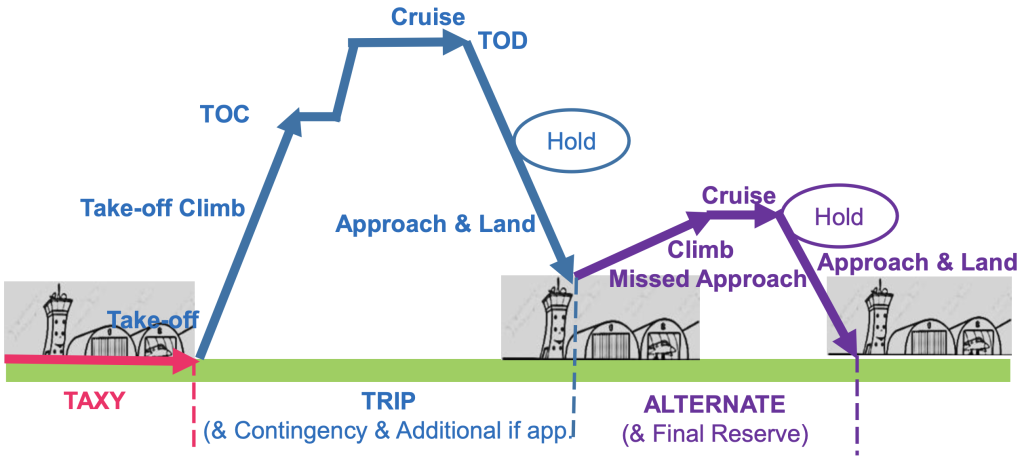
I’m going to round these next few figures for a flight that we have from London Stansted to Dublin so you can get a rough idea of how much fuel we take for a flight that block to block lasted 01 hour 23 minutes and was in the air for only 56 minutes.
I would like to state that my maths isn’t bad, where I have rounded some figures up in the below example and some down it changes the values and as such by adding only a small amount on does tip it over the edge for a new rounding! First we have our trip fuel which was 2600kg and expected to take us 01 hour 01 minutes in the air – already we did this quicker than planned so saved fuel = good! Next we have our minimum contingency which in this case was 5 minutes at holding speed; this was 200kg for 5 minutes. Our alternate was to divert to Belfast in Northern Ireland and this required 1200kg of fuel and would take 27 minutes. Our final reserves for 30 minutes holding would be 1100kg fuel. We didn’t have any additional reserve fuel for this flight. What our EFL does take into account is that this aircraft we were flying had a fuel bias of 3.5% meaning typically this aircraft where it’s a bit older, the engines are a bit thirstier so burn on average 3.5% more fuel and this is taken into account in our figures. This means our planned take-off fuel was 5300kg or 5.3 tonnes. In our flight plan we have 37kg added for ATC – likely if we needed to hold going into busy Dublin or a longer taxi when we landed in Dublin. Bringing a revised take-off fuel total to 5400kg. We then add on our taxi fuel of 190kg meaning our total block fuel and the minimum we had to take was 5400kg (again, this is where I’ve rounded figures). We then chose to take an additional 1100kg (just under 30 minutes) for gusting forecast weather in Dublin; the METAR and TAF indicated a 10kt crosswind for when we would be landing, with the potential for gusts to take it up to 16kts. With this in mind and the potential for the need to go around and perform another approach in Dublin, this is why we took extra fuel. It also was due to rounding up rough figures plus 100kg as we’re allowed to take – I.e. if the fuel figure was 5,419 we can round up to 5,500 and add an extra 100kg bringing the total to 5,600kg. Our total fuel for this flight that we took from London Stansted to Dublin was 6,500kg or 6.5 tonnes of fuel. We landed in Dublin with 3900kg of fuel onboard, meaning the whole flight we burnt a total of 2,700kg which is less than our planned taxi and trip fuel so we saved fuel
The Boeing 737 burns fuel at a rate of 2,400kg per hour (1,200kg per hour per engine) or 200kg every 5 minutes when in flight so based on this amount of fuel we’re taking to get to Dublin, we have enough fuel for just over 02 hours and 40 minutes flight time, meaning we have plenty of fuel on board!
These numbers seem very high and I’m not surprised, my road car takes 55L of fuel (35kg) and roughly costs me £82.50 based on todays rough fuel prices of 149.9p/litre. To scale this up to airline sizes and prices, the current price of Jet A1 fuel, is $0.541 per litre (44.0p/litre). Due to the specific gravity of fuel being different to that of water where 1kg water is 1litre; for jet A1 fuel 1litre is 0.8kg. 4900kg equates to 3,920 litres of Jet A1 fuel times by the price of £0.44 per litre means the amount of fuel we took to Dublin cost Ryanair £1,724.80. Now just imagine if it was the same price as 95 Unleaded from your local petrol station that is 3 times the amount!
I’m going to steal this next bit from Captain Chris on Instagram who flies the Airbus A350 for Virgin Atlantic for these figures; in that aircraft in a typical flight from London Heathrow to Los Angeles, the A350-1000 burns 6,100kg to take-off and climb to an initial cruising altitude of FL360 (36,000ft) in 27 minutes, and burns 10,000kg in the first hour! The Airbus A350-1000 then burns a further 6,000kg per hour as it crosses the Atlantic. Finally, in the descent and approach lasting 35 minutes burns 900kg fuel and the last hour only requires 3,000kg fuel total. This means their total fuel required for this 10 hour flight is approximately 70,000kg fuel! This flight would cost Virgin Atlantic approximately £24,640! For a bit of context to show just how large amounts of fuel are required in these long haul aircraft; the same Dublin flight I used those figures from, our block weight meaning the total weight of the aircraft and everything/everyone onboard we left the gate with was a measly 63,096kg in comparison!
Now at the beginning I mentioned my distance travelled to the moon and also the distance travelled by Apollo 13 which got me thinking. How much fuel did it take to send Neil Armstrong, Buzz Aldrin and Michael Collins on the Apollo 11 mission to the moon and return. Now, firstly I have no idea if these figures are 100% correct, this is only from researching through Google! “The total volume of fuel used in the Apollo 11 mission is quite substantial. The Saturn V rocket, which launched Apollo 11, used a combination of fuels: First Stage: Used around 2,700,000 liters (about 713,000 gallons) of RP-1 (kerosene) and liquid oxygen (LOX). Second Stage: Consumed approximately 1,200,000 liters (around 317,000 gallons) of liquid hydrogen and liquid oxygen. Third Stage: Used about 110,000 liters (around 29,000 gallons) of liquid hydrogen and liquid oxygen. Overall, the total volume of propellant for Apollo 11 was roughly 4 million liters (over 1 million gallons). This massive amount of fuel was essential for overcoming Earth’s gravity and sending astronauts to the Moon.”
Now, this brings us onto the question; why do airlines fly at such high altitudes? Part of the answer includes terrain clearance and noise sensitivity, but the answer you’d likely say as to why travelling so high is because aircraft burn less fuel. And you’d be right… to an extent. Per hour, the Boeing 737 burns 2,400kg irrespective whether this is at an altitude of 1,000ft or 41,000ft; however, this is where I think it gets interesting. Mach number (which we travel at in the cruise – roughly speaking somewhere about Mach 0.77, or 77% of the speed of sound) depends on the temperature of the air. I’m going to use International Standard figures where at 1,000ft the temperature would be 13ºC based on a standard temperature lapse rate – i.e. the temperature drops at 2ºC per 1,000ft up to the tropopause where the temperature remains constant. If we were travelling at 250kts indicated airspeed at 1,000ft this would equate to a Mach number of 0.38. Now if we keep all other variables in line with the standard atmospheric lapse rate, i.e. pressure and density, but increase the altitude so the temperature decreases too and remain at an indicated airspeed of 250kts, the true airspeed increases to 507kts & thus Mach number also increases to 0.88. Meaning in the same amount of time, because we’re travelling at a quicker speed, we cover a greater distance at altitude; and therefore we burn less fuel per nautical mile at a higher altitude than a lower altitude and therefore save fuel per nautical mile despite out fuel burn per hour remaining the same.