A highly crucial subject when it comes to flying an aircraft. Mass and Balance is all about determining where items of various weight and size should be loaded onto an aircraft to ensure that it still remains safe to fly. As a passenger you don’t think about if the Centre of Gravity is within limits and what effects it could have if if it is outside one of these limits. However, without going into great depths of detail, with the Centre of Gravity too far forward your aircraft will be too stable meaning it is very difficult to manoeuvre; again, put the Centre of Gravity too far aft and you will have ease in manoeuvring the aircraft but it will not be stable at all. Not only does this has issues with controllability and manoeuvrability, but by having an aft Centre of Gravity will result in less fuel burn as there is less of a down force needed to keep the nose up.
On top of focusing on the Centre of Gravity, we need to pay attention to the masses onboard and if they’re acceptable. Can we get on more fuel to ‘tanker’ it so we can make use of lower fuel costs at a refilling destination as opposed to high fuel costs elsewhere. Or from an airlines finances department, can we get on more passengers, if there’s empty seats – I haven’t seen any airlines double stacking passengers… yet! Or alternatively, can we take more cargo/traffic load which the airlines can gain revenue for carrying and therefore higher profits. Then on top of this, let’s begin moving items around gain more favourable flight conditions.
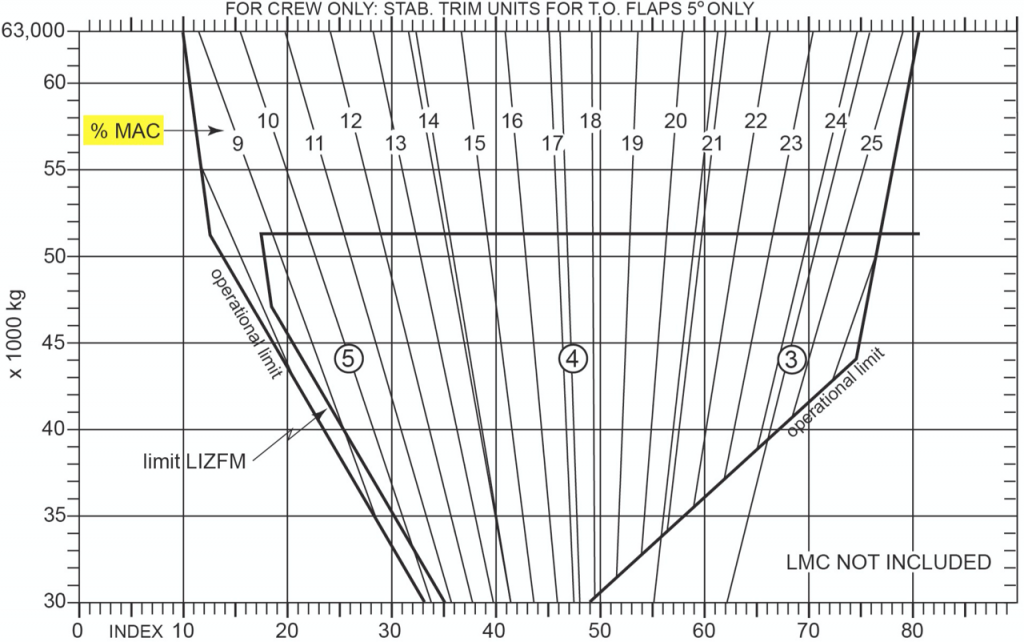
Once we had determined how to load the aircraft, we looked at different types of aircraft (not type specific such as your A350, Boeing 787, Embraer 175) but as to the category of aircraft. These are your Single Engine Piston (SEP), Multi-Engine Piston (MEP), Medium Range Jet Transport (MRJT) and the Long Range Jet Transport (MRJT), and the different ways of loading up the aircraft, stage by stage and calculating the necessary Centre of Gravity position and the take-off mass
The breakdown of topics we learnt in Mass and Balance is as follows:
- Chapter 1 – Units and Conversions,
- Chapter 2 – Aircraft Mass Definitions,
- Chapter 3 – Allowed Take-Off Mass,
- Chapter 4 – Maximum Traffic and Fuel Load,
- Chapter 5 – Cargo Loading and Limitations,
- Chapter 6 – The Effect of Mass and its Distribution,
- Chapter 7 – Datum, Moments and Determining CG,
- Chapter 8 – Aerodynamic Chord and CG Position,
- Chapter 9 – Adjusting the CG Position,
- Chapter 10 – Methods for Weighing Aircraft,
- Chapter 11 – Weighing Passengers, Crew and baggage,
- Chapter 12 – The SEP 1 Specimen Aircraft,
- Chapter 13 – The MEP 1 Specimen Aircraft,
- Chapter 14 – Performance Class A: The MRJT,
- Chapter 15 – Performance Class A: The MRJT Load and Trim,
- Chapter 16 – Performance Class A: LRJT Load and Trim.
A grand total of 376 pages to learn and 27 hours in lesson to learn it all, and I’m delighted to announce, that I passed Mass and Balance with 81% in my EASA exam!