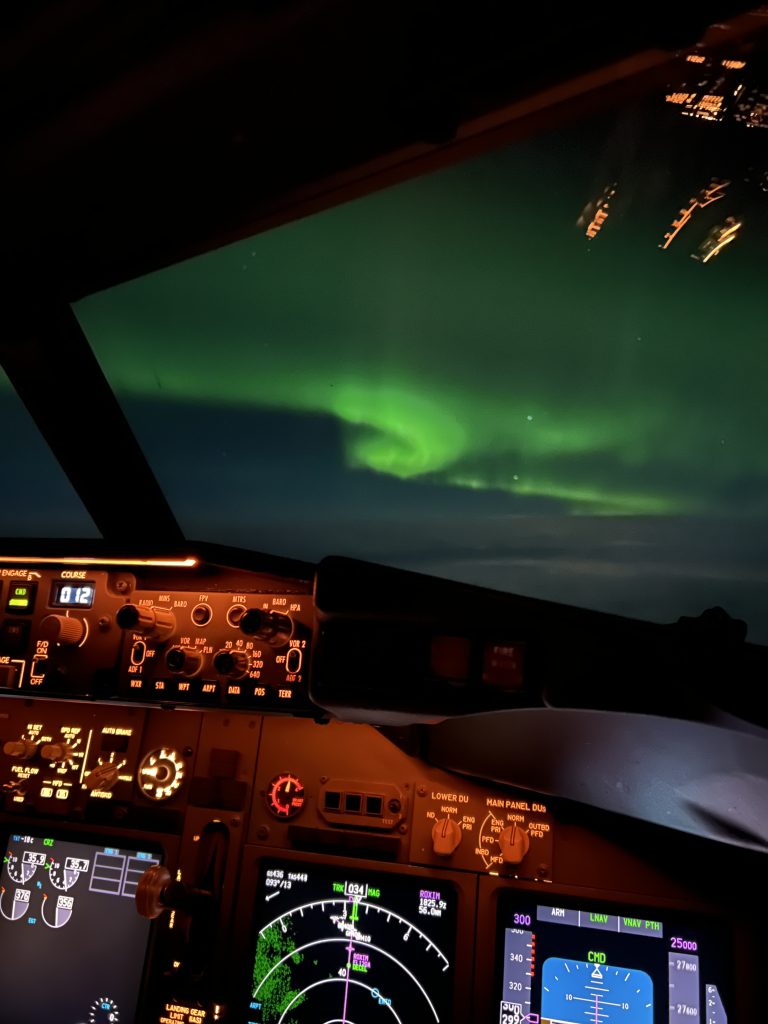
At the 4th cloud, turn left. Then at the 19th cloud, you have arrived at your destination. Thats not quite how we navigate in the air, so it needs to be done via other methods, and this is where Radio Navigation steps up to the plate. There are numerous ways we can variegate using different pieces of equipment where some are more accurate than others meaning they’re more useful in various situations, for example, when coming into land, you need a highly accurate system where the maximum possible deviation is minimal but at a compromise, you won’t get huge range from it, but if you’re going into land, this isn’t a big problem.
We look at the various types of navigation aids, how they work and what will be displayed in the cockpit to us as pilots. We then go into further detail and have a look at future air navigation systems that we will likely get to fly at some point in our career but are not yet fully developed.
This then further stems onto equipment thats onboard the aircraft that we can use to ensure the safety of the flight, for example, the airborne weather radar (AWR) where it uses doppler to detect the movement of detectable precipitation which can therefore indicate areas of potential turbulence so when flying, we can avoid these as best we can to ensure the flight remains safe and smooth.

The breakdown of topics we learnt in Radio Navigation is as follows:
- Chapter 1 – Basic Radio Theory,
- Chapter 2 – VHF Direction Finding (VDF),
- Chapter 3 – Non-directional Beacon (NDB),
- Chapter 4 – VHF Omnidirectional Range (VOR),
- Chapter 5 – Distance Measuring Equipment (DME),
- Chapter 6 – Instrument Landing System (ILS),
- Chapter 7 – Microwave Landing System (MLS),
- Chapter 8 – Basic Radar Theory,
- Chapter 9 – Weather Radar,
- Chapter 10 – Secondary Surveillance Radar (SSR),
- Chapter 11 – Area Navigation (RNAV),
- Chapter 12 – Flight Management System (FMS),
- Chapter 13 – Satellite Navigation System,
- Chapter 14 – Future Air Navigation System (FANS),
- Chapter 15 – Performance Based Navigation (PBN),
- Chapter 16 – Precision-like Approaches,
- Chapter 17 – On-airport Navigation.
A grand total of 672 pages to learn and 30 hours in lesson to learn it all, and I’m delighted to announce, that I passed Radio Navigation with 86% in my EASA exam!