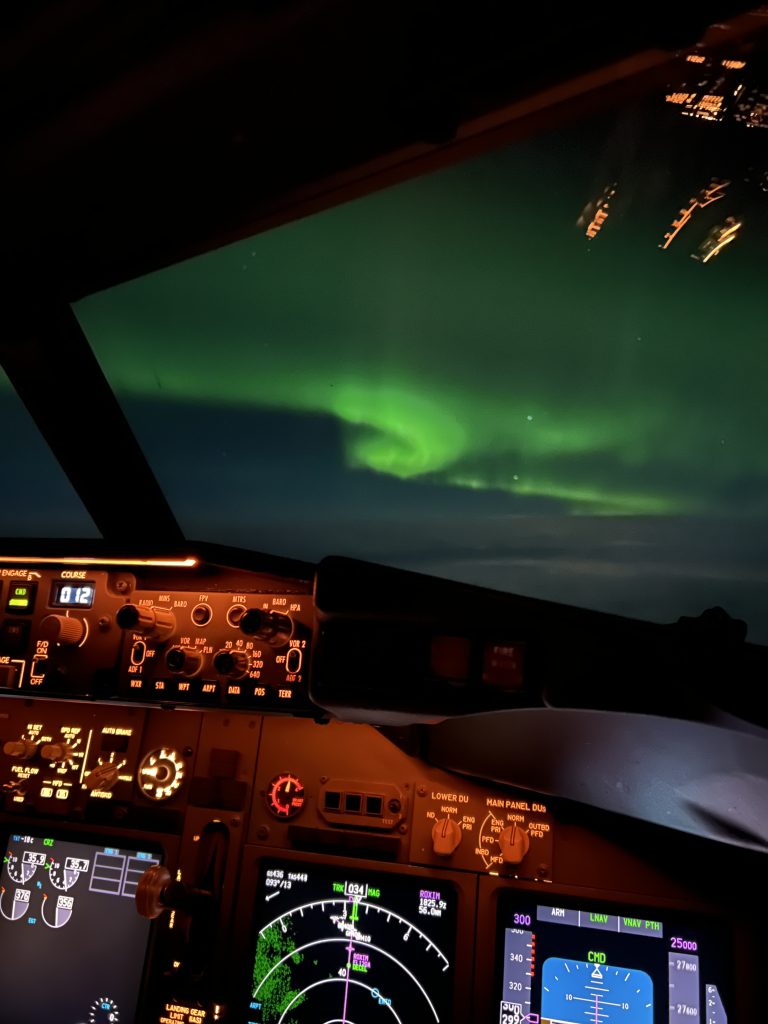
Wednesday 1st November 2023 to Thursday 30th November 2023. Sectors 45 to 66, 141 hours 44 minutes line training flight time; total distance of 43,865 nautical miles which equates to 12.2 times the length of the Nile, 2 times round the equator of the Earth or 21.1% of the distance to the moon! I’ve also carried a total of 10,011 passengers across the skies of Europe! I’ve had 2 out of base’s this month in Dublin and Alicante as well as flying out of my usual base, Leeds Bradford Airport!
My month began in Leeds Bradford flying to Faro in Portugal, and also flying down to Malaga. However, the delays we experienced in Malaga were monumental! The day started smoothly enough departing on time, which is always good, we made up a bit of time in the air and landed in Malaga early – the passengers were delighted! We turned our iPad’s off aeroplane mode and saw we had a slot departing Alicante for over an hours time; given we normally complete a turnaround in 25 minutes, this was huge! We began doing our usual checks and working through our tasks that needed to be completed when the slot was removed meaning we could go on time… fantastic! We started to work to this schedule as we didn’t want to be late and miss this as who knows how long it would be until we got a slot again. All ready on time when suddenly we see on the board infront of us pilots that we had a slot, the dispatcher comes up to us with the final passenger and cargo numbers and we question this; turns out they didn’t think we would be ready so put it in themselves… typical! So we were sat waiting for a while on the ground and listening to other aircraft they were struggling with slots too. A Jet2 on the ground had been waiting for over an hour with passengers onboard and when they questioned what was going on like the rest of us, the response was we have nothing for you so had to wait even longer. Ouch. We did finally depart Malaga nearly an hour late, but it was turning into a rather long day for us!
Further flights form Leeds included Alicante, Dublin and back again to Malaga this month. I’m slowly becoming more familiar with various airports around Europe that I fly to regularly, such as Alicante, Palma De Mallorca, Malaga and Dublin which also makes planning easier when you know certain things; such as in Palma De Mallorca we have to take the gear slightly earlier due to the terrain and in Alicante we can expect shortcuts form ATC.
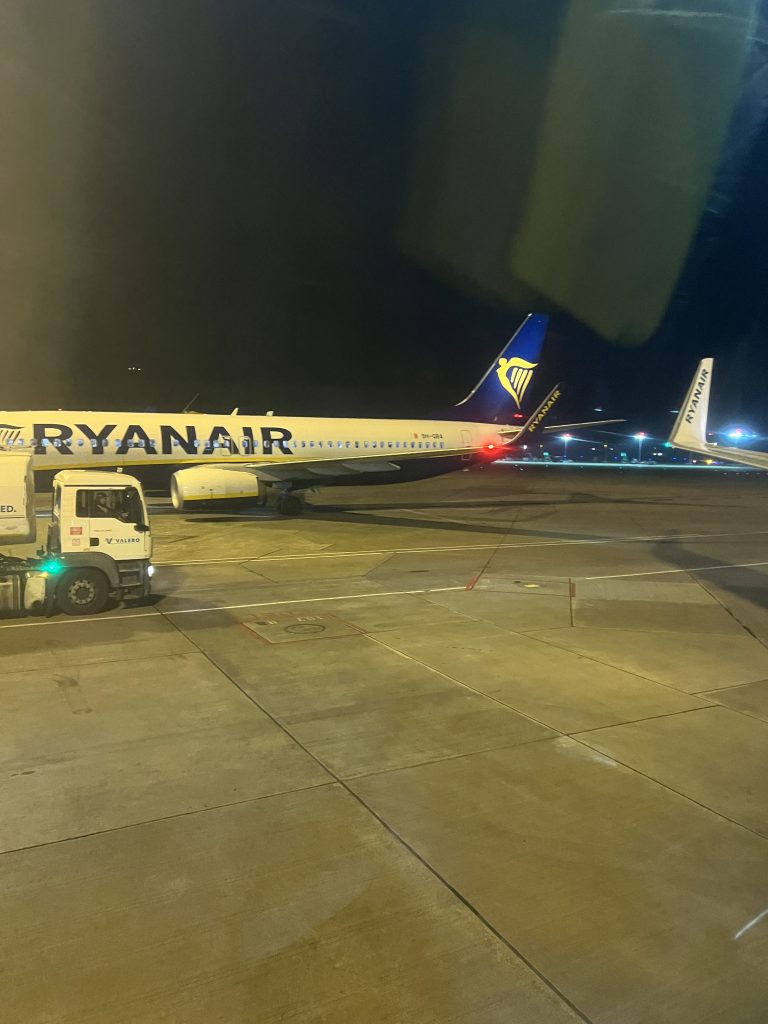
I was then given an out of base placement in Dublin for 4 flights, 2 days. The first day took me on my quickest flights to date, only 160nm lasting from taking the brake off and pushing back to brakes set and engines shutdown only 48 minutes from Dublin to Glasgow. Fantastic couple of sectors to fly and meant I had to be on it with regards to my set-ups and briefings so always challenging me and pushing me further and actively encouraging me to improve which I love; I always want to be better! The second flight wasn’t so smooth and was to Berlin. We arrived at the aircraft and as I turned on the battery and went to connect the ground power… nothing. To cut a long story short after the engineers were called and troubleshooted the problem, a circuit breaker had tripped in the electronics bay on the previous crew shutting the aircraft down. We departed for Berlin only slightly late, however having to be pushed to complete a full setup in a much shorter time was again pushing me which I loved; 2 days in Dublin and been pushed on all my flights which I love.
Next up was another out of base in Alicante where I’d be flying back to the U.K. to Exeter on my first day. When we arrived in Exeter, although it was mostly clear skies it was a freezing cold -5ºC! This gave me my first experience to winter operations, something I’ll become a lot more familiar with in the forthcoming months! We de-iced the aircraft and came back to the lovely and warm Alicante, off to the subbed for me for the rest of the day! Next up was to Santiago, an internal flight in Spain and my final day back to the U.K. and the rain to Newquay. All went well and was lovely to have some time in a place I’ve never been to previously, not to mention, spend some time in the sun which we don’t get much of in the U.K.!

Discussion Item – Turnarounds
You see your Ryanair flight pulling up to the gate as your boarding ticket has already been scanned and you’re waiting to get onboard. As soon as the last passenger is off, you’re then onboard and 25 minutes after the aircraft has pulled onto the stand, we’re off again. Compared to other airlines this is mega quick, but it’s the not-so-secret secret to Ryanair’s success – time on the ground is time the airline isn’t making any money! But what you may not realise, is this time is extremely busy for us pilots. Once the transit shutdown checklist has been completed, typically our roles are then reversed, the pilot who was PF (pilot flying) becomes PM (pilot monitoring) and vice-versa, and then the work begins!
I’m going to start by telling you about how things normally work when we arrive at the aircraft for our first flight of the day, assuming the aircraft is in the ‘cold and dark’ state. The PF goes into the aircraft to begin their checks. The PF completes the flight deck safety inspection and preliminary flight deck procedure. This involves checking the aircraft documents, anything noted from the previous flights that isn’t right with the aircraft. We then begin what’s known as the rainbow flow so coming down the centre pedestal, behind the F/O seat, through the aft overhead panel, behind the Captain’s seat. The PF then completes the preflight procedure and sets the FMC ready for flight.
Meanwhile, while the PF is completing this inside, the PM is completing the walk around, checking the exterior of the aircraft for any defects or anything wrong, as well as making sure everything is correct. Once you’ve done it a few times, it’s very easy to look for only what’s wrong rather than looking to make sure everything is right too. Once the walk around is complete, the PM also completes their side of the preflight procedure.
Now, it’s time for our briefing’s. In Ryanair, some of this would’ve already been discussed in the crew room pre-flight such as major threats, how much fuel we need, weather at departure airport, arrival airport and en-route too. Any NOTAM’s (notice to air-men) that are effecting us, or could effect us. Our briefings follow the format of T-RIBETS. T being for threats and error management; this could be weather on departure, NOTAM’s, language difficulties, distractions, taxiway or runway incursions, ATC clearances, late changes, other traffic, low altitude on SID, automatic frequency change on departure or terrain to name a few. Next we move onto the R for route check. The PF selects the appropriate page in the FMC while the PM reads and verifies what’s on the electronic flight bag (EFB) – our iPad’s, this finishes with the ground distance and the expected fuel upon landing. If this checks, the route is then executed. Next we have I, our instrument cross-check we read the time in UTC, the QNH reading the altitude, minimum flap retraction altitude (MFRA) set in the event of an engine failure, flight directors on and the standby instruments are set. Next is the Briefing for take-off briefing which must include the type of aircraft, left/right seat take-off, runway, flaps, noise abatement procedure. Then it can also include anything relevant to the take-off such as thrust setting, wet speeds, anti-ice, engine out SID, autopilot engagement if different to the standard 1,000ft. E is for emergency briefing to be done for the first flight of the day, and then the final part before each PF’s first flight. T is for taxi, so the expected taxi routing from the stand to the runway, paying attention to any hot-spots or taxiway/runway incursions we may have. Finally, we finish by briefing the SID from the chart into the FMC and cross-checking it’s been entered correctly with the appropriate speed and altitude restrictions entered.
Normally it’s at this point where we complete the safety inspection checklist and before start checklist down to the PA while we wait for other people, this is also a good time to receive our clearance. The Captain then completes the PA, welcoming the passengers onboard. Now, we’re waiting for the LID – Loadsheet Information Document. This has our passenger figures, how many are in the front, middle and back as well as the amount of cargo we’re carrying. We enter these figures into our EFB to calculate our speeds and ensure we’re not overweight and the aircraft is balanced. When you check in for your flight and your seat is assigned, this will ensure that the weight and balance of the aircraft is suitable; when passengers move however to be sat with their friends and family this can throw our figures out so it is important you sit where you’re assigned! We then enter these speeds into the FMC and we’re ready to go from our end! We complete the before start checklist to the line. Once we’ve received the all good from the cabin, we ensure everyone on the ground is ready and we complete the before start checklist below the line. Next is contacting ATC for our push and start clearance and then we’re moving. From arriving for our duty to this point is 45 minutes.
Now, there’s a lot to get done in this point and we’re also reliant on everyone doing their jobs at the same time – it’s a team effort relying on everyone. So what’s the difference between this and a turnaround which takes just 25 minutes? Simply put, not a lot! The only difference is the PF doesn’t need to complete the flight deck safety inspection and preliminary flight deck procedure, other than that, it all remains the same. There are small “short-cuts” we can take to make things quicker for us on the ground; such as if we’re flying to Spain taking approximately 2.5 hours, in the cruise the PM who will become the PF can enter the route into the FMC under a separate tab (route 2 where route 1 is active) – this saves time on the ground.
Is 25 minutes long enough? Other airlines have much longer turnaround that Ryanair with some short-haul carriers being about an hour long! It is a push against time sometimes and there are times when I’d love an extra 5 minutes but 90% of the time it’s plenty of time and nothing to worry about, so as I mentioned at the top, all the time we’re on the ground, money isn’t being made. Leeds Bradford to Dublin is 1 hour in block time, with a 25 minute turnaround at each end brings a total of 2 hours 50 minutes; if we were to have an hour turnaround each end this would be 4 hours long – enough time to run the flight again by Ryanair times! Thats anther 189 passengers (-800 seres aircraft), and at just £9.99 a seat is an extra £1,888.11 in revenue, assuming no-one has hold baggage, pre-picked/pre-booked their seats, paid for legroom, booked in advance, not buying anything onboard. That’s certainly better than a kick in the teeth!